Selling a country or estate home in Dover is different from selling an average suburban house. Buyers here expect scale, privacy and an easy-to-imagine lifestyle, from gracious interiors to inviting outdoor spaces. You want to honor your home’s character while presenting it in a way that moves today’s buyer to act. In this guide, you’ll learn what matters most, what it costs and how to coordinate a smooth, efficient rollout to market. Let’s dive in.
Why staging matters in Dover’s high-value market
Dover sits at the top of the MetroWest market. The Town of Dover’s FY2026 interim valuations list the average single-family valuation at $1,720,791 and a median of $1,479,000. That confirms a consistently high-priced local market, even as month-to-month sales data can swing due to low transaction counts. When only a handful of homes sell in a given month, presentation and timing can make a visible difference in buyer response. You need a plan that elevates your home above the noise and tells the right story to the right audience. Town of Dover valuation data
Staging does more than tidy a room. In the National Association of REALTORS 2025 Profile of Home Staging, about 29% of agents reported that staging increased offers by 1–10%, and nearly half of sellers’ agents said staging reduced time on market. The living room, primary bedroom and kitchen are the highest-impact rooms to stage. That is true even for large estate properties. NAR 2025 Profile of Home Staging
Stage the interior for scale and flow
Prioritize the right rooms
Focus your budget where buyers decide. Stage the living or family room, the primary suite and the kitchen first. These rooms carry most of the emotional weight. Secondary spaces can be edited and lightly styled after the big three shine.
Scale furniture to grand rooms
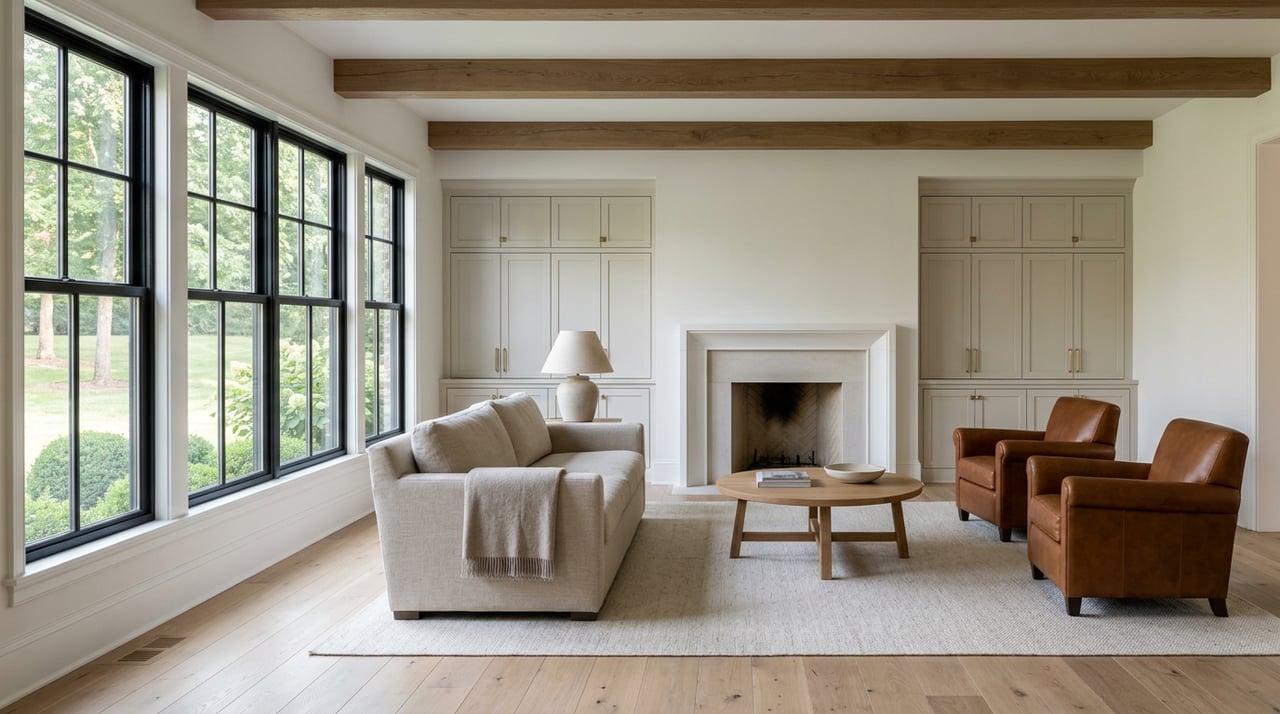
Large rooms and high ceilings can feel impressive yet impersonal without structure. Use larger-scale pieces or create multiple seating groups to define conversation areas. Anchor each zone with an appropriately sized rug, keep sightlines clear to fireplaces and windows, and ensure easy circulation from one space to the next.
Create flexible, multi-use zones
Today’s buyers want rooms that work for real life. A quiet corner styled as a work-from-home nook, a guest room that reads as a serene retreat, or a finished space that suggests a gym or studio helps buyers imagine living in your home. Keep vignettes simple and purposeful: a desk and chair, a reading lamp, a bench and hooks in a mudroom.
Keep character, neutralize distractions
If your home has exposed beams, wide-plank floors or a stone fireplace, highlight them. Tone down busy wall colors and remove heavy personal collections so the architecture can take center stage. You are editing, not erasing, the country character that makes your property distinctive.
Light, warmth and sightlines
Layer overhead fixtures with floor and table lamps to avoid dark corners. Use warm-color-temperature bulbs for evening showings. Remove heavy drapery that blocks daylight, and style mantels and built-ins with a light hand so the eye moves easily to the room’s best features.
Showcase the land and outdoor lifestyle
First impressions from drive to door
Country buyers notice the approach. Edge and mow, clear branches, power-wash paths and porches, and keep the front entry crisp. A freshly painted front door and well-defined walkway signal care before a buyer steps inside.
Define outdoor rooms buyers will use
Stage a dining area on the deck, a lounge space on the patio and a simple fire-pit circle with chairs. On acreage, create a clear walking route that connects the house to the property’s highlights, whether that is a barn, a pond, a meadow or a view point.
Make acreage legible
Buyers want to understand how the land lives. Prepare a one-page parcel sketch or survey excerpt for showings that marks paddocks, trails, wells, septic fields and any conservation areas. This clarity builds trust and helps buyers see value in usable acres.
Tidy outbuildings and amenities
Sweep and organize barns, workshops and sheds. If safe and practical, show a basic setup that suggests function: a tidy tack room, a workbench or a storage wall. Aim for clean utility, not clutter.
Costs, vendors and media that sell the story
What staging typically costs and why ROI can work
National averages vary by scope, with larger estates at the higher end. Treat the ranges below as starting points, then adjust for size and furniture needs. The economic case is simple: if staging can add even 1–10% to offers and reduce time on market in a high-value town like Dover, it can pay for itself. NAR staging outcomes
Typical price bands, based on industry ranges:
- Consultation only: $150 to $600 for a room-by-room plan. Industry cost ranges
- Partial staging for an occupied home: often $1,500 to $4,000 for the first month, with accessories, art and select furniture included. Larger estates price higher.
- Vacant staging with furniture rental: several thousand dollars for month one, then monthly rental fees thereafter.
- Professional photography base package: often starts in the low hundreds, scaling with property size. Photography and drone add-ons
- Drone photo add-on: roughly $100 to $350 depending on image count and video needs. Drone pricing examples
- Twilight images: added fee, worthwhile if exterior lighting, pool or views shine at dusk.
Hire vendors with country-property experience and inventory scaled for larger rooms. For any drone work, confirm the operator is FAA certified and insured. FAA Remote Pilot Certificate requirements
Photography, drone and twilight essentials
Estate buyers often start online. Invest in professional interior and exterior photography, schedule a twilight session if your property glows at dusk and commission a short aerial reel to show approach, setting and orientation. On larger parcels, drone stills that reveal tree lines, meadow edges and outbuildings help buyers grasp the full offering quickly. Photography and drone packages
Virtual staging when useful
Virtual staging can be a smart supplement for vacant rooms or extra spaces. It is cost efficient on a per-image basis, but it does not replace the emotional impact of in-person staging. If you use it, clearly label virtually staged images in the MLS and marketing to meet local rules. Virtual staging compliance guidance
Timeline to market: a 3–6 week plan
- 3–6 weeks out: Declutter, complete small repairs and gather key documents. If applicable, start your Title 5 septic planning and confirm any lead-paint records.
- 2–3 weeks out: Paint priority rooms, deep clean and finalize your staging plan.
- 1–2 weeks out: Install staging, style outdoor areas and complete landscape touch-ups.
- Photo week: Book interiors, exteriors, aerials and twilight once everything is show-ready. Upload polished media on list day to capture maximum attention. Typical staging and photo timelines
Massachusetts legal checklist for sellers
- Title 5 septic: Many sales trigger a Title 5 inspection and report. Start early, since a failing or non-compliant system can affect negotiations. Massachusetts Title 5 septic inspection rules
- Lead-based paint (pre-1978 homes): Provide the EPA/HUD pamphlet, disclose known information and allow buyers the stated testing opportunity. Keep signed disclosures on file. Federal lead-based paint disclosure rule
- Massachusetts disclosure norms: The state has buyer-beware aspects, but agents must disclose known material defects and follow consumer-protection laws. Be ready with clear facts on septic, boundaries, easements and any material conditions. Massachusetts disclosure norms and consumer protection
- Virtual staging disclosures: Label virtually staged images in the MLS and marketing per local rules to avoid misrepresentation. MLS virtual staging compliance
Quick pre-listing checklists
Interior checklist
- Declutter and depersonalize to let rooms breathe. Remove heavy collections and most family photos.
- Complete small, visible repairs like loose hardware, leaky faucets and chipped glazing.
- Refresh paint in high-impact rooms with a warm, neutral palette.
- Scale furniture and rugs to room size. Create conversation groupings in large spaces.
- Layer lighting and switch to warm bulbs. Remove heavy drapes that block light.
Exterior and acreage checklist
- Mow, edge, blow, and clear paths and driveways. Power-wash porch and entry.
- Stage a porch, deck and a dining or lounge zone. Add weather-resistant furniture and a few planted pots.
- Mark or explain key features for showings: pond, paddocks, trails, easements and view points. Prepare a one-page acre breakdown with a small survey excerpt.
- Clean and organize outbuildings. Photograph to show utility, not storage overflow.
Photo-day deliverables checklist
- Interior daytime photos for all staged rooms, plus exterior daylight shots.
- Drone images and a 20–30 second aerial clip that shows approach and setting. Confirm your pilot is FAA certified. Drone operator requirements
- Twilight images to highlight exterior lighting, patios, pool or long views.
- Floor plan or a 3D tour for large estates to help buyers understand flow.
Ready to position your Dover estate
Thoughtful staging respects your home’s character and makes scale, flow and lifestyle effortless for buyers to grasp. Pair that with strong photography, strategic aerials and a clean legal packet, and you set the stage for stronger offers and a faster sale in Dover’s high-value market. If you want a hands-on plan tailored to your property, schedule a confidential consultation with Mary Crane Properties. We bring senior-level guidance, premium marketing and deep local knowledge to every listing.
FAQs
What staging upgrades have the best ROI for a Dover estate?
- Prioritize the living room, primary suite and kitchen, then lighting updates and paint. NAR data links these rooms to higher impact on offers and days on market.
How much does professional staging cost for a larger Dover home?
- Expect consultation fees from $150 to $600, partial occupied staging often $1,500 to $4,000 for month one, and higher for large or fully vacant homes with furniture rental.
Do I need drone photos to sell acreage in Dover?
- Drone imagery is a high-value add when you have acreage, outbuildings or long approaches, and it helps online buyers understand setting quickly. Always use an FAA-certified pilot.
What should I disclose about septic systems in Massachusetts?
- Many sales require a Title 5 inspection and report. Address timing early and be ready to share results, since non-compliance can affect negotiations.
Is virtual staging allowed in MLS marketing for Dover listings?
- Yes, but images must be clearly labeled as virtually staged in the MLS and marketing materials according to local compliance rules.