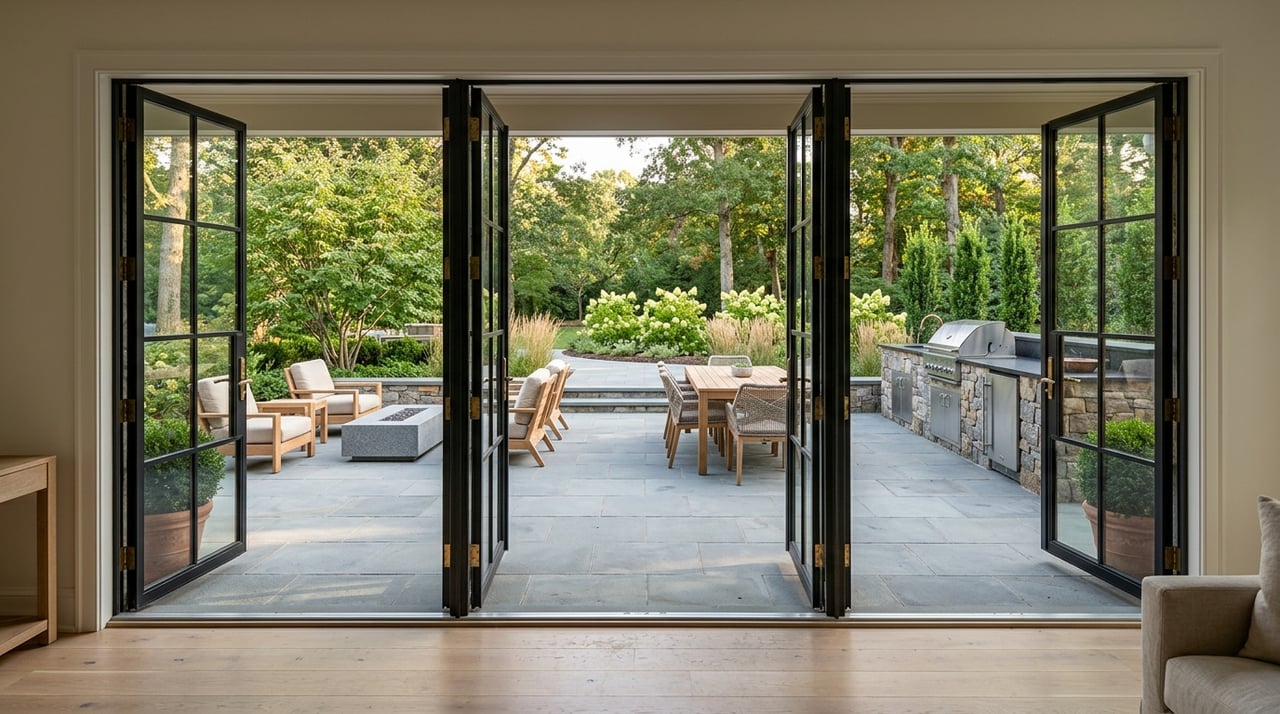
Are you looking for a home that feels just as inviting outside as it does inside? In Dover, that idea is more than a design trend. It matches the town’s country setting, private lots, and strong connection to woods, trails, open land, and the Charles River. If you are buying, selling, or simply thinking about how outdoor spaces shape value, this guide will show you what indoor-outdoor living really looks like in Dover country homes. Let’s dive in.
Why Indoor-Outdoor Living Fits Dover
Dover is a small, predominantly residential town in Norfolk County with a 2024 estimated population of 6,057. The town covers 15.10 square miles and is known for its peaceful rural setting, scenic roads, trails, woods, pasture land, stone walls, farmhouses, and barns. That physical setting naturally supports homes that open outward to the landscape.
The local housing profile also helps explain why outdoor living matters here. According to U.S. Census QuickFacts, 97.9% of occupied housing units in Dover are owner-occupied, and the median value of owner-occupied homes is $1,340,300. In a market where owners tend to stay invested in both lifestyle and long-term property value, outdoor spaces often carry real weight.
Dover’s open-space character is especially important. The town’s master plan notes that Dover has roughly 3,000 acres of protected open space, more than 30% of its total area. That is unusual for a Boston suburb, and it shapes what buyers and sellers often notice first: privacy, views, natural edges, and a sense that the land is part of the home experience.
What Indoor-Outdoor Living Means Today
Indoor-outdoor living is not just about adding a deck or patio. Today, homeowners often think in terms of outdoor “rooms” with clear functions for cooking, dining, relaxing, gardening, or activity. That approach works especially well in Dover, where larger lots and mature landscapes can support multiple zones without losing a calm, cohesive feel.
In practical terms, the best outdoor spaces here tend to feel connected to the house rather than separate from it. A terrace off the kitchen, a porch off the family room, or a covered lounge near the pool can make the home feel larger and more usable. The goal is not to add features for their own sake, but to create spaces that fit the site and the way you live.
For Dover homes, that often means designing around the land first. A well-placed outdoor area can frame a lawn, garden, pasture, or wooded edge. In country properties and estate settings, the landscape is often one of the home’s greatest assets, so the most successful indoor-outdoor living plans let you enjoy it from several vantage points.
Dover’s Climate Shapes Good Design
A strong outdoor space in Dover has to work across more than one season. Using NOAA climate normals for nearby Boston Logan as a regional guide, January averages around 29.9°F and July averages around 74.1°F. The region also sees about 43.59 inches of annual precipitation and 49.2 inches of annual snowfall.
That matters because outdoor living in Dover cannot be planned for summer alone. The best spaces tend to support warm, humid days, rainy stretches, cool spring and fall evenings, and snowy winter conditions. If you are evaluating a home or preparing one for sale, versatility matters.
This is one reason covered and transitional spaces are so appealing in the local market. They help extend use beyond a short warm-weather window. They also make outdoor spaces feel more integrated with the house, which is especially valuable in a New England setting.
Outdoor Features That Make Sense in Dover
Patios and terraces
Patios and terraces are often the backbone of indoor-outdoor living in Dover country homes. They create a direct extension of the main living level and can frame the surrounding landscape in a simple, elegant way. In a town where privacy and natural views are part of the appeal, these spaces often work better when they feel grounded in the site rather than overly formal.
For buyers, a well-sited terrace can signal easy entertaining and everyday comfort. For sellers, it can help tell a stronger story about how the home lives beyond its interior square footage. The most appealing examples usually connect naturally to the kitchen, dining area, or family room.
Screened porches and covered lounges
Screened porches make particular sense in Dover’s climate. They offer fresh air and views while helping with bugs, rain, and the changing shoulder seasons of spring and fall. Covered lounges can serve a similar purpose, especially when paired with comfortable seating, ceiling fans, and lighting.
These spaces often appeal because they feel usable without demanding perfect weather. They can support quiet mornings, casual dinners, or larger gatherings while still feeling sheltered. In many Dover homes, a screened porch is one of the most practical ways to strengthen the indoor-outdoor connection.
Decks and porches
National buyer-trend data continues to show strong interest in decks, front porches, and rear porches. In Dover, these features tend to resonate most when they are scaled to the home and positioned to take advantage of landscape views or privacy. They can also help create a more layered transition from house to yard.
If you are preparing a home for the market, condition matters. Buyers are often drawn to outdoor spaces that feel ready to enjoy, not spaces that suggest deferred maintenance. Clean lines, thoughtful furniture placement, and clear function can make a meaningful difference.
Outdoor kitchens and fireplaces
Outdoor kitchens and fireplaces have seen strong growth in buyer interest, especially at higher price points. In Dover’s upper-tier market, these features can feel very natural when they are part of a broader outdoor plan. They tend to work best when they support real use, such as dining near the kitchen or gathering in a covered seating area.
That said, restraint matters. A successful outdoor kitchen should suit the property and the site, not overwhelm them. In country homes, the strongest design choices often feel intentional, timeless, and tied to the architecture and landscape.
Pools, spas, and cabanas
Pools, spas, and cabanas remain relevant in high-end properties, but buyer preferences have become more intentional. Current outdoor-living trends point toward thoughtful pool design, smaller pools or spools in some settings, and adjacent shade or seating zones. In Dover, that can translate into pool areas that feel like private outdoor suites rather than stand-alone amenities.
Pools are also a practical planning issue. Dover’s permit materials state that swimming pools are accessory structures under zoning, must meet setback requirements, and may not be used until final inspections are approved and the required barrier or fence is installed. For buyers and sellers alike, that means a pool is both a lifestyle feature and a compliance item.
Gardens and native plantings
Gardens fit Dover’s country character exceptionally well. Native and site-appropriate plantings can help a property feel established, natural, and easier to maintain over time. Dover’s own guidance notes that native plants can reduce watering needs, which is especially useful when you are designing larger landscapes.
Gardens also support the “outdoor room” idea in a quieter way. They can define edges, frame views, soften terraces, and make transitions between formal and natural areas feel more graceful. In Dover, the most compelling outdoor environments often combine hardscape with layered, site-sensitive planting.
Barns and accessory structures
For estate and equestrian properties, indoor-outdoor living can extend beyond the main house. Barns, stables, detached garages, and cabanas can all be part of the larger property story. Dover’s Planning Board explicitly lists these as accessory structures subject to site plan review.
That matters because in this market, buyers often look at the property as a whole. A barn, carriage-style garage, or pool cabana is not just an outbuilding. It may contribute to how the home functions, how it is presented, and how its lifestyle is understood.
Why Site-Specific Design Matters in Dover
In many towns, outdoor upgrades can be discussed in generic terms. Dover is not one of them. Here, the strongest approach is site-specific because the land itself often comes with opportunities and constraints that directly shape what is possible.
The town advises property owners to check for wetlands, vernal pools, easements, conservation restrictions, deed restrictions, and scenic-road issues before doing tree or landscape work. The Conservation Commission also states that activities within 100 feet of wetlands or 200 feet of a perennial stream or river require filing. That means outdoor planning should start with the property’s conditions, not with a wish list.
For buyers, this is a reminder to evaluate outdoor potential carefully. For sellers, it is a chance to present improvements as thoughtful and site-sensitive. In Dover, that kind of stewardship tends to support credibility and value.
Permitting Points to Keep in Mind
If you are considering changes to a Dover property, local permitting should be part of the conversation early. The building permit packet for additions and renovations requires plot plans showing existing structures, proposed additions, setbacks, and well and septic locations. It also specifically includes decks and porches in its permit schedule.
This is particularly relevant in a market where screened porches, terraces, decks, and pool areas are so central to lifestyle. Even attractive ideas need to fit the site, setbacks, and existing property systems. On larger country lots, details involving land, septic, and water can have a real impact on planning.
That is one reason local guidance matters so much in Dover. Outdoor living features may look effortless when done well, but behind the scenes they often depend on careful review of the lot, the house placement, and any conservation constraints. The process is most successful when design goals and site realities are aligned from the start.
What Buyers Should Look For
If you are shopping for a Dover country home, it helps to look beyond the headline features. A pool, porch, or terrace may catch your eye first, but the real question is how well the outdoor spaces work with the home and the land. Properties that feel cohesive usually offer the strongest long-term enjoyment.
As you compare homes, consider these questions:
- Does the outdoor space connect naturally to the main living areas?
- Is there a mix of open-air and covered use?
- Do the views, privacy, and landscaping feel intentional?
- Are features like pools, cabanas, decks, or porches well sited?
- Does the lot suggest any wetland, setback, or conservation considerations?
- Do accessory structures add function to the property as a whole?
In Dover, outdoor living is often part design and part land strategy. When both pieces are working together, the property usually feels more complete.
What Sellers Should Highlight
If you are preparing to sell a Dover home, indoor-outdoor living can be one of your most compelling strengths. The key is to present outdoor spaces as part of a larger lifestyle story, not as isolated upgrades. Buyers in this market often respond to how the home lives, entertains, and connects to the setting.
Focus on the elements that make your property feel distinct. That may be a terrace overlooking mature grounds, a screened porch that extends the family room, a carefully placed pool and cabana, or gardens that reflect the home’s country character. In Dover, subtlety and fit often matter more than quantity.
It also helps to be prepared on the technical side. If a buyer asks about setbacks, permits, land constraints, or accessory structures, clear information can build confidence. In a high-value market, polished presentation and credible property guidance often go hand in hand.
If you are considering how to position a Dover country home for the market, Mary Crane Properties offers experienced buyer and seller representation, valuation and market advisory, and knowledgeable guidance for complex estate, land, septic, water, and equestrian property questions.
FAQs
What does indoor-outdoor living mean in Dover homes?
- In Dover, indoor-outdoor living usually means creating connected spaces for dining, relaxing, entertaining, and enjoying the landscape through features like terraces, porches, decks, gardens, and covered outdoor areas.
Which outdoor features are most appealing in Dover country properties?
- Features that often fit Dover well include patios, terraces, screened porches, decks, covered lounges, outdoor kitchens, fireplaces, pools, cabanas, gardens, and accessory structures such as barns or detached garages.
Why are screened porches popular in Dover, Massachusetts?
- Screened porches make sense in Dover because the local climate includes warm summers, rain, bugs, and cool shoulder seasons, so they help extend outdoor use in a comfortable way.
Do pools and cabanas require review in Dover?
- Yes. Dover treats pools as accessory structures under zoning, and they must meet setback requirements, complete final inspections, and have the required barrier or fence before use. Cabanas and other accessory structures may also be subject to local review.
How do wetlands affect outdoor living plans in Dover?
- Wetlands can directly affect what you can build or change. Dover’s Conservation Commission regulates activities within 100 feet of wetlands and 200 feet of perennial streams or rivers, so outdoor plans should be reviewed with site conditions in mind.
What should sellers emphasize about outdoor spaces in a Dover listing?
- Sellers should highlight how outdoor areas connect to the home, support everyday living and entertaining, and reflect the property’s setting through privacy, landscape views, gardens, and thoughtful site-sensitive design.