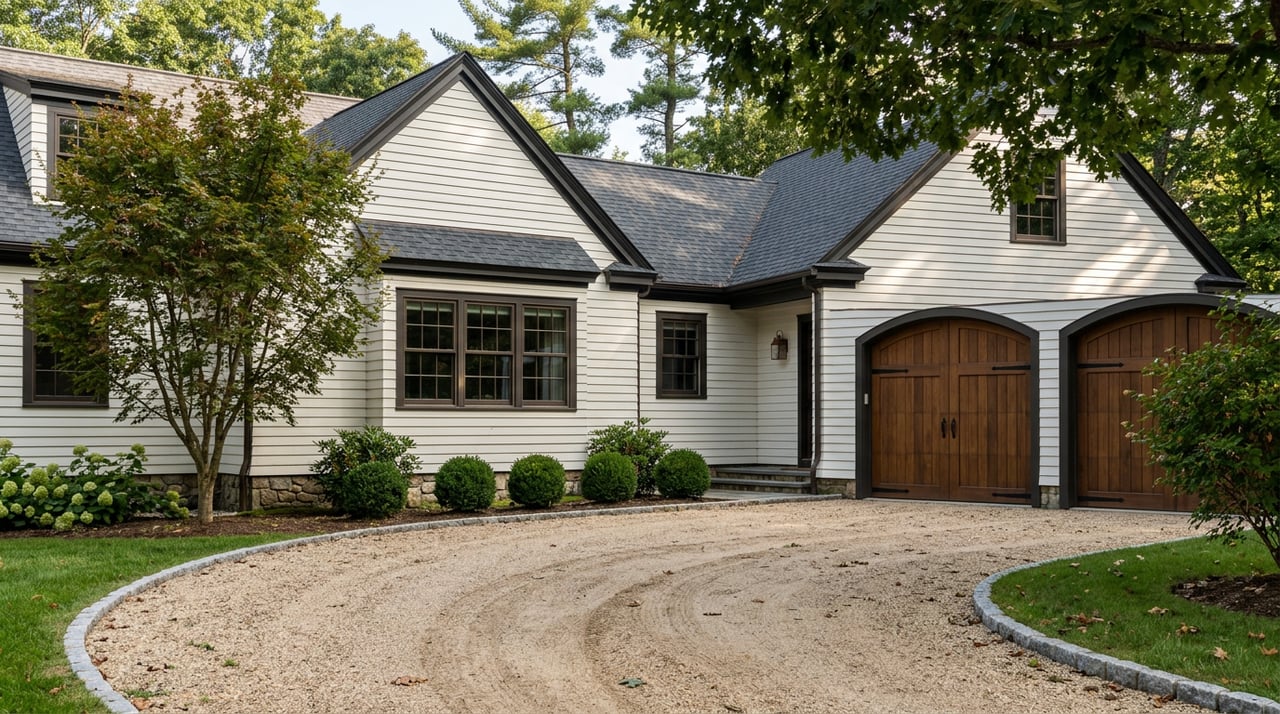
If you are weighing acreage, privacy, and a manageable Boston commute, Dover likely sits alongside Sherborn, Medfield, Westwood, Weston, and Wayland on your short list. Each town offers a different blend of lot size, zoning, commute options, and day-to-day convenience. In this guide, you will see how Dover stacks up so you can choose with confidence. Let’s dive in.
Dover at a glance
Housing and lot sizes
Dover is defined by large lots and single-family homes. Town data shows about 91% of residential properties are single-family, with an average single-family lot size of about 1.99 acres and average living area near 4,363 square feet. You can review these figures in the town’s Housing Production Plan.
Local zoning reinforces that low-density pattern. Dover’s Schedule of Dimensional Requirements includes districts with 1-acre and 2-acre minimums for single-residence lots, which helps explain why you see estate-size parcels across town. See the town’s zoning schedule for details.
Commute and access
Dover does not have an in-town MBTA commuter rail station. The town’s MBTA Communities materials confirm that residents drive to stations in neighboring towns or rely on car travel for daily commutes. You can read the town’s summary on the MBTA Communities page.
If rail access is a top priority, it helps to study the regional network and nearby park-and-ride options on the MBTA Commuter Rail map. Many Dover buyers accept a more car-centric routine in exchange for privacy and open space.
Day-to-day feel
Dover’s planning documents highlight conserved open space, riding stables, and connected recreational land that support a true country-town experience. If you value quiet roads, trail access, and room to stretch out, you will likely feel at home here. Explore this character in Dover’s Housing Production Plan.
How Dover compares to nearby towns
Sherborn
If you want very large parcels, Sherborn is a close peer to Dover. Zoning districts generally require 1-, 2-, or 3-acre minimums (Residence A, B, C), which sustains a pastoral, estate scale across town. The town’s planning studies emphasize conservation, groundwater protection, and low-density development. See the town’s housing study for a clear overview of these patterns in the Sherborn Town Center Housing Study.
Weston
Weston is another estate-scale community with scenic roads and predominantly single-family neighborhoods. Residence District A has a 60,000 square foot minimum lot size, with smaller bands in other districts, according to the town’s zoning summary. Buyers often consider Weston when they want an established large-lot setting with easier regional access into the Route 128 corridor.
Westwood
Westwood offers more variety in lot sizes and neighborhoods. Its zoning table includes single-family minimums of 12,000 square feet, 20,000 square feet, and 40,000 square feet depending on the district. Town materials also describe village areas and some multifamily options, which create day-to-day convenience while keeping a strong single-family base. Review the dimensional table in the Westwood Zoning Bylaw.
Wayland
Wayland is a traditional single-family suburb with multiple single-residence bands R20 through R60 (20,000 to 60,000 square feet). Its Housing Production Plan notes about 90% single-family housing, along with a more pronounced village center than Dover. You can find these details in the Wayland HPP.
Medfield
Medfield offers a broad mix. Zoning districts range from 12,000 square feet minimums up to 80,000 square feet in the Residential Estate district. That range produces both quieter, lower-density streets and smaller-lot neighborhoods near a defined town center. See the district standards in Medfield’s Zoning Bylaw.
Which town fits your priorities
- If you want privacy, acreage, and trail or equestrian access: Focus on Dover and Sherborn. Their large-lot zoning and open-space networks create a true country setting supported by town plans.
- If you need simpler MBTA or highway commutes: Consider towns with in-town stations or easy park-and-ride access. Westwood is a common option regionally. Use the MBTA Commuter Rail map to see nearby lines and stations.
- If you prefer smaller yards and more housing variety: Medfield and Wayland offer multiple single-residence lot bands and planning frameworks that support more housing types than Dover.
- If you want estate-scale character with stronger regional access: Weston is a frequent pick thanks to its large-lot fabric and proximity to major job corridors.
Quick reference: zoning and housing snapshot
| Town | Typical single-family lot minimums | Housing mix snapshot |
|---|---|---|
| Dover | 1 to 2 acres | About 91% single-family per town HPP |
| Sherborn | 1, 2, and 3 acres | Predominantly single-family, estate-scale |
| Weston | 60,000 sq ft in District A | High single-family share, scenic roads |
| Westwood | 12,000 to 40,000 sq ft | High single-family with some multifamily areas |
| Wayland | R20 to R60, 20,000 to 60,000 sq ft | About 90% single-family per town HPP |
| Medfield | 12,000 to 80,000 sq ft | Mix of lower-density and smaller-lot areas |
What to know before you decide
- Verify current zoning and overlays. Many towns have updated bylaws in response to the MBTA Communities Act. Dover maintains current materials on its MBTA Communities page.
- Plan your commute using modes, not minutes. Check the MBTA Commuter Rail map and test drive routes during your typical travel times.
- Match lot size to lifestyle. Larger parcels mean more privacy and possibilities and also more stewardship. Factor in maintenance, well and septic considerations, and any equestrian or recreation needs.
Ready to explore Dover and its peers
If you want a grounded, confidential discussion about how Dover stacks up to Sherborn, Westwood, Weston, Wayland, or Medfield for your goals, you can work directly with a local senior broker who understands estate and country properties. Schedule a confidential consultation with Mary Crane Properties to chart your best next step.
FAQs
What makes Dover different from other MetroWest country towns?
- Dover combines very high single-family composition, large average lots near 2 acres, and zoning with 1- and 2-acre minimums, which sustains a low-density country setting documented in the town’s Housing Production Plan and zoning schedule.
Does Dover have an MBTA commuter rail station in town?
- No. Dover’s MBTA Communities materials confirm there is no in-town commuter rail station, so residents drive to neighboring stations for rail access.
How do lot sizes in Sherborn compare with Dover?
- Both towns emphasize large lots. Sherborn’s districts generally require 1-, 2-, or 3-acre minimums, while Dover’s single-residence districts commonly require 1 or 2 acres.
Which towns nearby offer more housing variety than Dover?
- Medfield and Wayland have multiple single-residence lot bands and planning frameworks that support more housing types, including some areas with smaller-lot neighborhoods.
Is zoning changing in these towns due to the MBTA Communities Act?
- Many towns are updating bylaws and overlays. Dover maintains current information on its MBTA Communities page, and you should check each town’s site for updates before you buy or build.