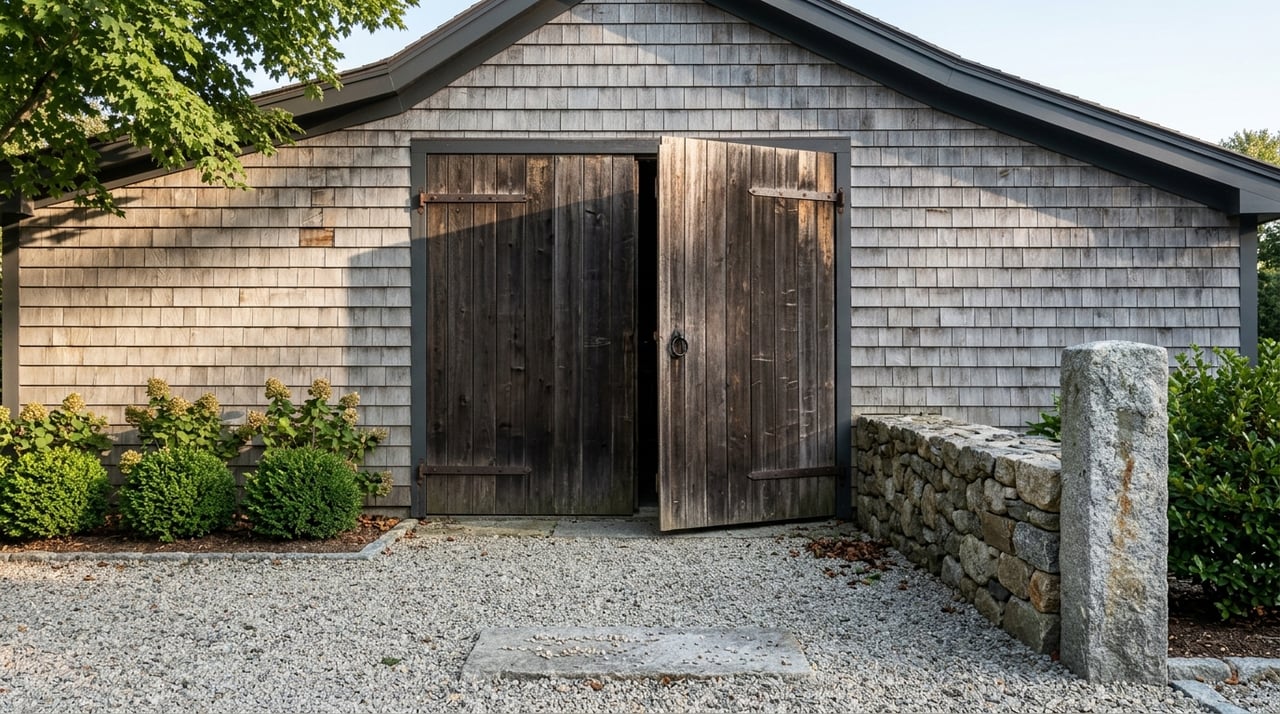
If you are drawn to the idea of a historic farmhouse or estate, Dover offers something more than a beautiful old home. It offers a living rural landscape shaped by centuries of farming, preserved land, stone walls, barns, trails, and careful stewardship. If you are considering buying or selling in Dover, it helps to understand what makes these properties distinctive and what practical issues come with them. Let’s dive in.
Dover’s Historic Landscape Still Shapes Daily Life
Dover is in Norfolk County, about forty minutes from downtown Boston, and the town describes itself as a predominantly residential community with a peaceful rural setting, scenic roads, open space, trails, horseback riding, and access to the Charles River. Its history goes back more than 350 years, and farming was once the town’s principal local industry. That heritage still shows up clearly in the land today.
You can still see Dover’s rural past in open pasture, old stone walls, farmhouses, and barns. This is one reason historic farm and estate living here feels different from simply owning an older house in a suburban neighborhood. In Dover, the setting is often just as important as the structure itself.
Several well-known properties help tell that story. Powisset Farm has been farmed continuously for more than three centuries, Caryl Farm began as an 83-acre country farm, and the Larrabee-Whiting Estate preserves a former family farm landscape that now connects to the town’s open-space network. Together, they show how Dover’s past remains part of everyday life.
Why Dover Properties Feel So Distinctive
In Dover, the appeal of a historic property is rarely limited to architecture alone. The experience often includes fields, wooded edges, barns, trails, and long views that reflect a much older land pattern. That broader landscape gives many properties a sense of permanence and character.
The town notes that stone walls still divide properties and mark the agricultural past. Across Dover, preserved land and trail systems connect places such as Noanet Woodlands, Pegan Hill, Mumford Wildlife Forest, Powisset Farm, and the Larrabee-Whiting Estate. For many buyers, that setting is part of what makes Dover so compelling.
This preservation culture is also active. Dover’s Open Space Committee identifies land that may be eligible for conservation restrictions or other preservation options, and the Dover Land Conservation Trust focuses on preserving rural character, protecting water resources, supporting plant and animal life, preserving historic resources, and providing recreation. In other words, the town’s character is not accidental. It has been intentionally maintained.
Historic Farmhouse Architecture in Dover
Dover’s older homes often date to the 18th and early 19th centuries. The town’s open-space plan lists historic houses from the 1720s and 1740s, which gives you a sense of how deep the architectural history runs here. Some properties have been updated over time, while others preserve remarkably early features.
The Caryl House, built in 1774, is one of the clearest examples of a Georgian-era farmhouse in Dover. It includes a center chimney, hall, parlor, kitchen hearth and beehive oven, and borning room. According to the Dover Historical Society, the kitchen was never updated, making the house a rare example of a property preserved close to its original form.
Barns and outbuildings matter just as much in Dover’s historic story. The Fisher Barn, probably built around 1774, now houses early tools and agricultural implements. Its relocation from Centre Street when that property was redeveloped shows how a historic barn can still be preserved even when the original parcel changes.
Barns, Land, and Estate-Scale Living
For many Dover buyers, estate living is about more than square footage. It is about the relationship between the home, the outbuildings, and the land. A barn, paddock, pasture edge, or trail connection can shape how a property lives day to day.
Powisset Farm is a strong example of this layered history. Its land was used for pasture as early as the 1660s, later passed through long-running local families, served as a horse farm, and eventually became a CSA farm with barnyard life, fields, and trails. The property reflects a Dover pattern of preserving the past while allowing thoughtful evolution.
If you are evaluating a historic farm or estate property, it helps to look beyond the main residence. Barns, sheds, field patterns, access points, fencing, and landscape features may all contribute to the property’s usefulness, value, and identity. In Dover, those elements are often central, not secondary.
Preservation Rules You Should Understand
One common question is whether all old Dover farmhouses are protected. The answer is no. Protection depends on the specific structure and any recorded restrictions tied to the land or buildings.
Dover’s Historical Commission works with the Massachusetts Historical Commission to identify, preserve, and protect historical resources. It also administers the town’s Demolition Delay Bylaw, which applies to houses, shops, barns, outbuildings, and other roofed structures on a permanent foundation that were built in or before 1929.
If the commission determines that a building is historically significant and preferably preserved, demolition can be delayed for one year. During that time, the owner and commission may explore alternatives such as adaptive reuse, relocation, or sale to a preservation-minded buyer. For buyers and sellers, that means due diligence matters early.
How Land Can Stay Private and Protected
In Dover, preservation does not always mean public ownership. Land can remain privately owned while still being permanently protected through legal tools. That is an important point for anyone considering a farm or estate property.
A conservation restriction is a legal agreement that permanently protects open space while leaving the land in private ownership. Dover’s open-space plan explains that a farmer can continue to farm land under a restriction while preventing subdivision or development. This can preserve the character of a property without ending its daily use.
Massachusetts also uses the Agricultural Preservation Restriction, or APR, program to protect farmland. This is a voluntary and permanent deed restriction that keeps the land protected while allowing the owner to retain ownership and pass it to future generations. State guidance also notes that APR can help support infrastructure such as barns, livestock housing, farmstands, wells, and fencing.
Another program to know is Chapter 61A. Massachusetts guidance says it applies to land growing agricultural or horticultural products, requires at least five acres in agricultural use for at least two years, and treats land under farm buildings such as barns and farm sheds as agricultural use. For a buyer or seller, the key takeaway is simple: some Dover properties may come with formal land-use or preservation frameworks that shape future options.
The Practical Side of Historic Ownership
The romance of a historic Dover property is real, but so is the responsibility. These homes and landscapes often require a more careful review than a typical house on a standard suburban lot. That is especially true when water, septic, and land history are part of the picture.
Water is one of the biggest practical issues in Dover. The town says nearly 70% of residential dwellings are served by private wells, about one-third are served by Aquarion, and the town has limited water infrastructure. Dover also has a water-restriction bylaw that applies to all water sources in town, including private wells.
The town requires a water-quality test on the existing well before the sale of any existing house. Dover also notes that many private wells draw from deep bedrock fractures that can be susceptible to contamination. For buyers, that means well conditions and water quality deserve close attention.
The Board of Health regulates private wells and septic systems, including installation, maintenance, and repair. On a historic farmhouse or estate property, you should expect to review well testing, septic records, drainage considerations, maintenance history, and any historic or conservation restrictions tied to the site. These are not side details. They are part of understanding the property fully.
What Buyers and Sellers Should Focus On
If you are buying a historic farm or estate in Dover, it helps to balance emotion with careful review. The setting may be beautiful, but the right decision depends on understanding the land, structures, and any restrictions that affect use. A thoughtful purchase process protects both your investment and your future plans.
If you are selling, preparation matters just as much. A property with historic character, barn features, open land, or private infrastructure often needs clear positioning and strong documentation. Buyers respond best when they understand not just the beauty of the property, but also how it functions.
That is where experienced guidance can make a real difference. Complex Dover properties often call for more than standard marketing. They benefit from strong local knowledge, a clear grasp of land and water issues, and a measured strategy that presents the property with accuracy and confidence.
Historic farm and estate living in Dover is ultimately about stewardship as much as style. You are not simply buying or selling a house. You are engaging with a landscape shaped over generations and protected with intention. If you want clear advice on how to evaluate, position, or market one of these distinctive properties, schedule a confidential consultation with Mary at Mary Crane Properties.
FAQs
What makes historic farm and estate living in Dover different?
- Dover properties often combine antique homes with barns, open land, stone walls, wooded edges, and trail connections, all within a town that has intentionally preserved its rural character.
Are all old homes in Dover protected by historic rules?
- No. Dover’s demolition-delay bylaw applies to certain roofed structures on permanent foundations built in or before 1929, and protection depends on whether a structure is determined to be historically significant and preferably preserved.
Can Dover farmland stay private and still be preserved?
- Yes. Conservation restrictions and APR protections can preserve land while keeping it in private ownership.
What water issues should buyers know about in Dover?
- Many Dover homes rely on private wells, the town requires water-quality testing before the sale of an existing house, and water restrictions apply to all water sources, including private wells.
What should you review before buying a historic Dover property?
- You should closely review well testing, septic records, drainage, maintenance history, and any historic or conservation restrictions that may affect the property or future use.