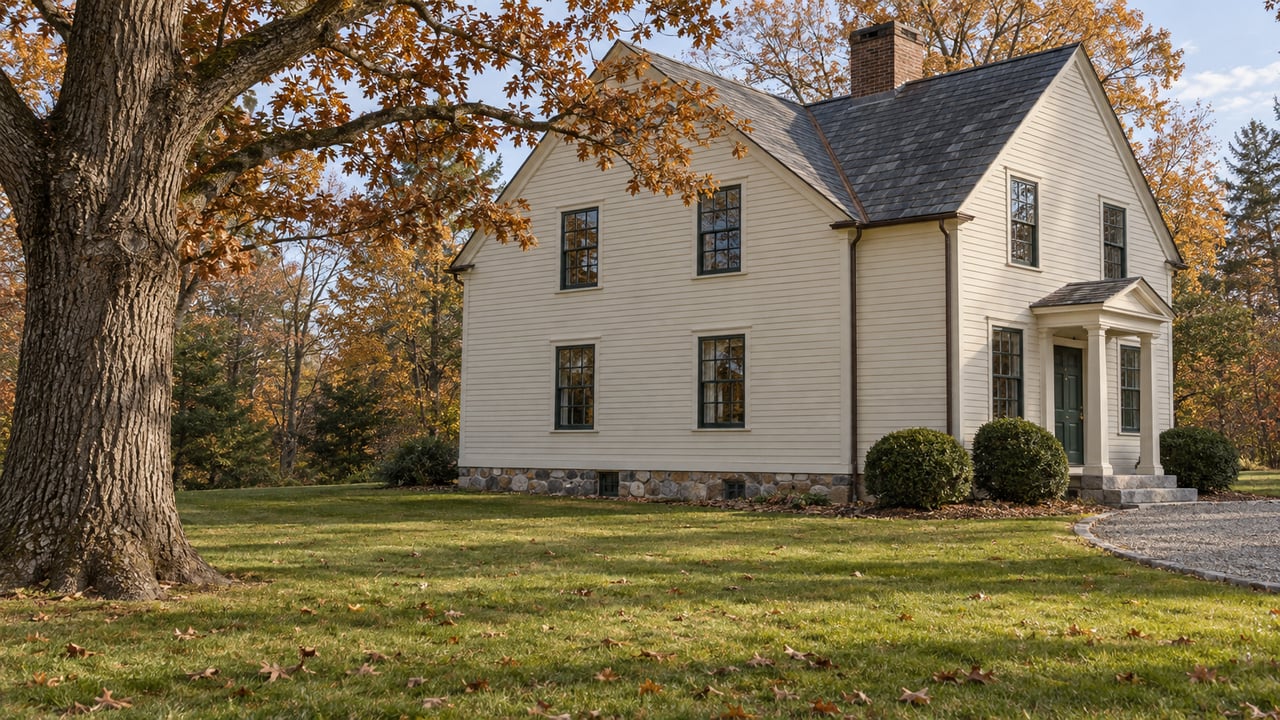
If you buy a large lot in Dover today, Dover's main construction-related tree rules mostly cover its edges and leave the middle open. The stormwater bylaw protects trees in the setbacks. Wetlands rules cover the buffer, and scenic road rules cover the roadside. Most of the open middle of a large parcel falls outside them. Dover's Tree Preservation Committee, working with the Metropolitan Area Planning Council, is drafting a bylaw to close that gap. The town's own analysis shows the gap grows with the size of the lot.
For anyone weighing a teardown, a new build or an acreage purchase, that matters. The value of those properties often depends on what can be built, cleared or turned into pasture. The committee's next public step is a community forum on Thursday, November 19, at the Caryl Community Center, 4 Springdale Avenue. Arrival and registration start at 6:30 p.m., and the interactive presentation begins at 7:00 p.m., according to the town's October 28 notice.
Where Dover's Tree Rules Reach Today
Dover already has several tree rules. Each one covers a specific area. The committee's June 8 kickoff presentation, drawing on the Conway School study, lists them:
| Existing rule | Where it applies | What it protects |
|---|---|---|
| Stormwater Management and Erosion Control | Projects disturbing more than 5,500 square feet or more than 25% of a lot | Trees over 6 inches in diameter within zoning setback areas |
| Dover Wetlands Protection | Within 100 feet of delineated wetlands | Wetland buffer areas |
| Subdivision Rules and Regulations | Any division of land into two or more lots | Review of existing trees over 8 inches in diameter near proposed roads |
| Scenic Roads Regulation | Town right-of-way along 27 specific scenic roads | Roadside trees |
| Groundwater Protection Districts Bylaw | Sensitive groundwater areas | Prohibits or limits tree removal |
The presentation's own assessment is that trees on a private lot outside wetland buffers or setbacks "have fewer protections, especially on larger lots." It also notes that the rules don't agree on what counts as a protected tree. Trunk-size thresholds differ from one bylaw to the next, and so do the requirements for replacement trees or payments.
Why Large Lots Have the Largest Gap
A setback is a strip around the edge of a lot. On a lot at the zoning minimum, those strips cover a meaningful share of the land. On a lot two or three times the minimum, the setbacks stay about the same width while the interior grows, so the protected share shrinks.
Dover's numbers make this a townwide issue. MAPC's July 1 progress presentation reports that 93% of the land in Dover, 9,251 of 9,867 acres, is zoned for 1- or 2-acre residential use. Of the parcels in the 1-acre district, 77% exceed the 1-acre minimum, and 81% of parcels in the 2-acre district exceed the 2-acre minimum. The presentation concludes that "lots that exceed the zoning minimum lot area have a larger share of lot area that is NOT protected via the stormwater bylaw."
MAPC also counted the largest parcels. In the 2-acre district, lots over 5 acres include 92 single-family residence parcels covering 827 acres. Another 54 parcels covering 723 acres are classified as "residential other," a category that includes multiple houses on one lot and vacant land, whether developable or not. To illustrate the setback-only problem, the presentation used examples of single-family lots of 54, 25 and 5.8 acres.
Building patterns add to the pressure. The kickoff presentation cites the Conway School study's finding from town tax records: houses built in Dover over the last ten years have an average footprint 62% larger than homes built from 1950 to 1989. Its list of key local issues opens with "clear-cutting trees on large residential lots," followed by erosion, runoff and basement flooding.
So the parcels with the most room to build are also the ones with the most unregulated canopy, and that combination is the problem the bylaw is meant to address.
What the Draft Is Still Deciding
The committee has not published bylaw text yet. MAPC's July presentation lists the design questions that will decide how much a future rule affects a given property. In plain terms, they are:
- How much of the lot is covered. The options are setbacks only, the entire lot, a percentage of the lot, or a link to cluster zoning.
- Which trees count. Possible definitions include trees above a set trunk diameter, measured at breast height, and "overstory" species that grow taller than 40 feet, an approach the presentation attributes to Needham. Native or threatened species, or trees in certain habitats, are also listed.
- Whether the rules change with lot size or use. The presentation raises exempting the smallest lots, making requirements stricter as lots get larger, and exempting some level of agricultural use.
- How fees work. Ideas include credits for saving trees that offset fees for removing others, a cap on the maximum total fee, and whether removing invasive trees should still require some mitigation.
- How it fits with existing rules. This covers how the bylaw lines up with the stormwater and wetlands rules and which rule controls if two of them conflict.
The kickoff presentation also showed how other communities handle these questions. They are examples from elsewhere, not proposals for Dover. Common triggers include new construction, demolition, typically of more than 250 square feet, and additions of at least 50% of gross floor area. Land clearing, grading and excavation can be triggers even before any building begins. Protection often starts at 6-inch trunks, with higher mitigation for "Significant" trees of 25 inches or more and "Legacy" trees of 55 inches or more. Payments into a tree fund range from $200 to $500 or more per inch, and replanting ratios run 1:1 or higher.
A per-inch fee shows how much the lot-coverage question matters. A rule that applies to the whole lot and charges by the inch would weigh much more heavily on a wooded interior building site than a rule limited to setbacks.
Two exemptions appear consistently in the best-practices review. Removing hazardous, dead or diseased trees is typically exempt from mitigation. Administrative waivers let town staff skip formal review for projects that won't harm protected trees.
The Concerns Raised in June
The community input so far argues for a narrow rule. MAPC's July 1 progress presentation summarizes concerns from the June public meeting. Participants worried that developers, many of whom do not live in Dover, are clear-cutting lots and changing the town's character. In the same meeting, participants asked that private property rights be respected and worried about the cost of hiring arborists for tree counts and landscape plan approvals.
Equestrian owners made a specific point. According to the deck, "prohibiting all clearance doesn't work for residents with livestock (horses, sheep), as they require open grazing areas & fields." Others asked whether invasive trees such as Callery pear and Norway maple should be treated differently from native or historic trees.
MAPC's takeaways from that meeting set the direction the committee is working from:
"Regulations should focus on large-scale lot clearing and significant canopy loss rather than minor tree removal activities."
The same summary calls for requirements that are "simple and easy to understand." It says homeowners and small-project applicants should rarely need to hire arborists or landscape architects, and that the bylaw should not discourage agricultural and equestrian uses.
The poll taken at that meeting was small, with nine or ten responses per question. In it, new residential construction and teardowns or major additions were the most-selected activities for the bylaw to cover, with eight votes each. Landscaping and site work drew five.
The scope also has limits. The kickoff presentation states that the bylaw will not address public street trees, trees on public or conservation land, forestry, agriculture or routine landscape maintenance.
Taken together, the input and the stated scope point to rules aimed at large construction projects and heavy clearing, with routine maintenance left alone. Where the lines fall for horse properties and very large parcels is still one of the main open questions.
The Calendar From Here
At the Planning Board's September 14 meeting, the Town Planner said the project was expected to conclude by the end of December. The Planning Board will be involved as the initiative "progresses toward Town Meeting." Vice Chair Valerie Lin said the group was waiting for survey results before finalizing the draft. Chair Carol Lisbon noted that the Tree Committee is a subcommittee of the Planning Board and will therefore need to vote on the draft, and she encouraged Board members to send in their input early. Those details are in the September 14 minutes.
The order of steps is:
- Thursday, November 19: community forum at Caryl Community Center, arrival at 6:30 p.m., presentation at 7:00 p.m.
- By the end of December: the MAPC-assisted drafting project is expected to wrap up.
- After that: a committee vote on the draft, with the Planning Board involved as the bylaw moves toward Town Meeting.
Project materials, survey results and recordings of past meetings are posted on the Tree Preservation Committee webpage.
A Few Questions Owners and Buyers Ask
Is there a tree bylaw in effect in Dover now? Not a standalone one. The rules in effect today are the stormwater, wetlands, subdivision, scenic roads and groundwater provisions in the table above, each tied to a specific area or type of project.
Would routine pruning or yard work be covered? The project's stated scope excludes routine landscape maintenance. The June takeaways also point toward large-scale clearing rather than minor removals.
Will horse pastures be treated differently? That is still being decided. Possible agricultural exemptions are on MAPC's list of design questions, and the June summary says the bylaw should not create barriers for agricultural and equestrian uses.
How might this affect a teardown purchase? Nothing is in force beyond the current rules. A buyer planning major site work on a large, wooded lot is looking at the type of project the committee has focused on, so the draft's final terms deserve close attention. This post is general information, not legal advice. Anyone planning a purchase or project should confirm current requirements with the town and their own attorney.
Mary Crane has spent years on the land questions that shape value in Dover, including septic, wells, setbacks and equestrian acreage, and the tree bylaw is the next one. If you are weighing a teardown, a new build or the sale of a wooded estate while the draft takes shape, Mary Crane Properties can help you work out what the land supports today and what to watch as the bylaw moves toward Town Meeting. Schedule a confidential consultation with Mary.