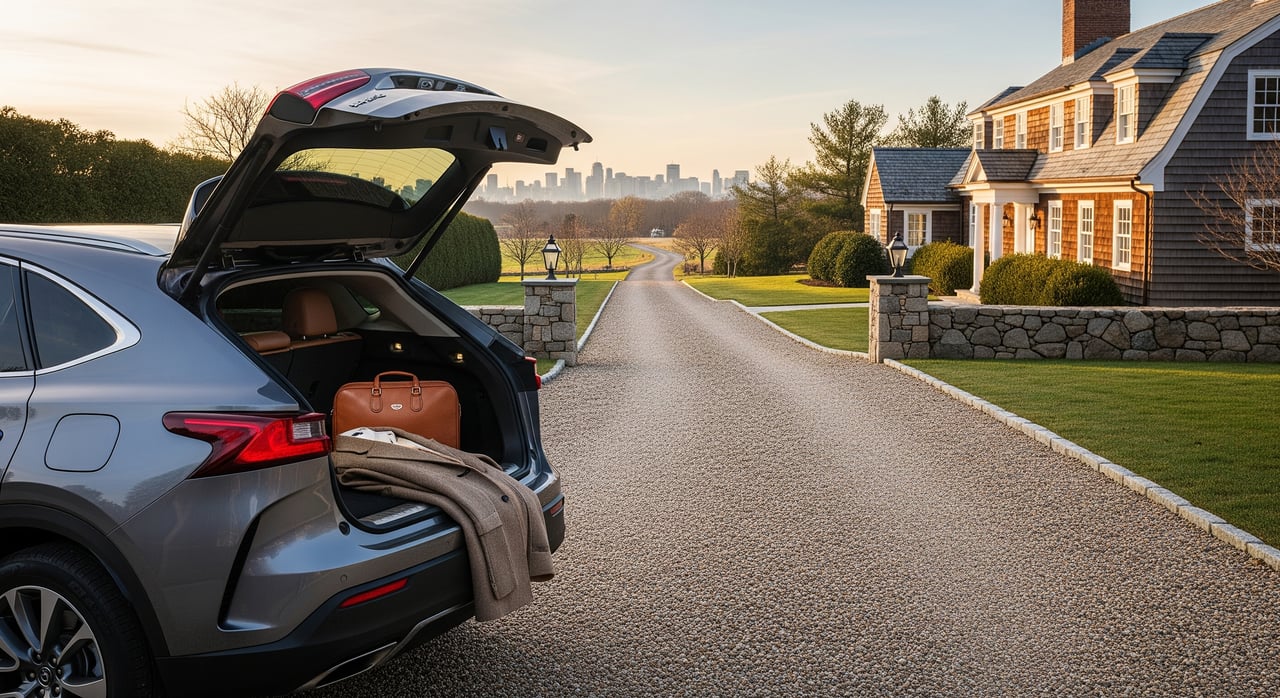
Thinking about living in Dover but worried about the commute into Boston? You want the quiet, country feel without sacrificing your time or sanity on the road or rail. In this guide, you’ll learn the most practical routes, when traffic is heaviest, and simple strategies to make your trip smoother from Dover or nearby Norfolk. Let’s dive in.
Your commute at a glance
From Dover, you can drive, take MBTA commuter rail from nearby towns, or use a hybrid approach that combines a short drive with rail or rideshare. Your best choice depends on your schedule, where in Boston you work, and how flexible your start time is. Many residents use park-and-ride strategies to avoid downtown parking. Building a reliable routine starts with testing your options.
Driving routes into Boston
Most drivers use local arterials like Route 109 or Route 135 to reach I-95/Route 128. From there, you can connect to I-93 for downtown and the South Station area, or merge onto I-90 (the Mass Pike) for Back Bay and points along the Pike. Expect slowdowns at the major interchanges, especially as you approach the city. Downtown parking is limited and costly, so many commuters prefer to park outside the core and continue by rail.
MBTA commuter rail options
Many Dover and Norfolk commuters use nearby stations in adjacent towns rather than a station inside Dover. Lines serving the Franklin and Needham corridors are commonly used, but schedules and parking rules vary by station. Start by checking the MBTA system maps and schedules to find your nearest station, weekday frequency, and zone-based fares.
- Review fares and pass options on the MBTA fares page.
- Confirm parking availability and policies at your chosen station through MBTA parking resources.
- Monitor delays before you leave with MBTA service alerts.
When traffic is worst
Morning peak inbound traffic typically runs from about 6:30 to 9:30 AM. Afternoon outbound peaks often stretch from roughly 3:30 to 7:00 PM. Expect bottlenecks on I-95/Route 128 near major junctions, on I-93 as it funnels into Boston, and on ramps that connect to I-90 toward Back Bay. Weather, construction, and major events like sports games can slow both roadway and rail travel, so give yourself margin on those days.
Planning tips that save time
- Try different departure windows. A 30 to 60 minute shift can make a big difference.
- Test a few routes for a week to find your most consistent travel time.
- Use a hybrid commute. Drive to a station with more parking, then take the train into the city.
- Check real-time conditions with transit and traffic apps before you head out.
Managing costs and parking
Monthly MBTA passes can lower per-trip costs if you ride regularly. If your employer offers pre-tax commuter benefits or shuttle subsidies, enroll to capture those savings. Carpool or vanpool when possible to split fuel and parking costs. For station parking, verify the permit or daily fee details in advance, and consider alternative stations if your first choice fills early. Local information is frequently updated on the Town of Dover and Town of Norfolk websites.
Tools and apps to trust
- Use MBTA service alerts for real-time rail updates and planned maintenance.
- Check Mass511 traffic for construction alerts, incidents, and highway conditions.
- Rely on navigation apps for live routing, but verify with local knowledge and a backup plan.
Build a flexible backup plan
Have a second option ready for bad weather or service disruptions. That could mean an alternate station, a later train, or a plan to drive in off-peak and park outside the core. If your workplace allows hybrid schedules, designate remote days on high-impact weather or event days to maintain productivity.
Is a Dover commute right for you?
If you value space, privacy, and a calmer daily rhythm, Dover and Norfolk are strong choices as long as you plan your commute wisely. Commuter rail often provides more predictable timing during peak periods, while driving can be faster outside the rush. The right plan balances cost, time, and convenience so you arrive relaxed and ready for the day.
If you are weighing a move and want candid guidance on neighborhoods, commute trade-offs, and property options, we can help. Mary Crane Properties offers senior-level, local advisory tailored to your goals. Schedule a confidential consultation with Mary.
FAQs
How long does the commute take from Dover to downtown Boston?
- Off-peak trips can be around 30 to 45 minutes by car or rail, while peak-hour travel commonly takes longer. Always check live apps and try sample runs at your typical times.
Is there a commuter rail station inside Dover?
- Many residents use nearby stations in adjacent towns. Use the MBTA system maps and schedules to find the closest active station and confirm parking.
What is the most reliable option during rush hour?
- Commuter rail is generally more predictable in peak traffic, while driving can be faster at off-peak times. Monitor MBTA service alerts and compare with live traffic.
How can I reduce commuting costs from Dover or Norfolk?
- Consider monthly MBTA passes, use employer pre-tax commuter benefits, and carpool or vanpool to share fuel and parking costs.
Where should I park if I take the commuter rail?
- Verify each station’s rules and capacity using MBTA parking resources. If a lot fills early, plan an alternative station with a larger lot.