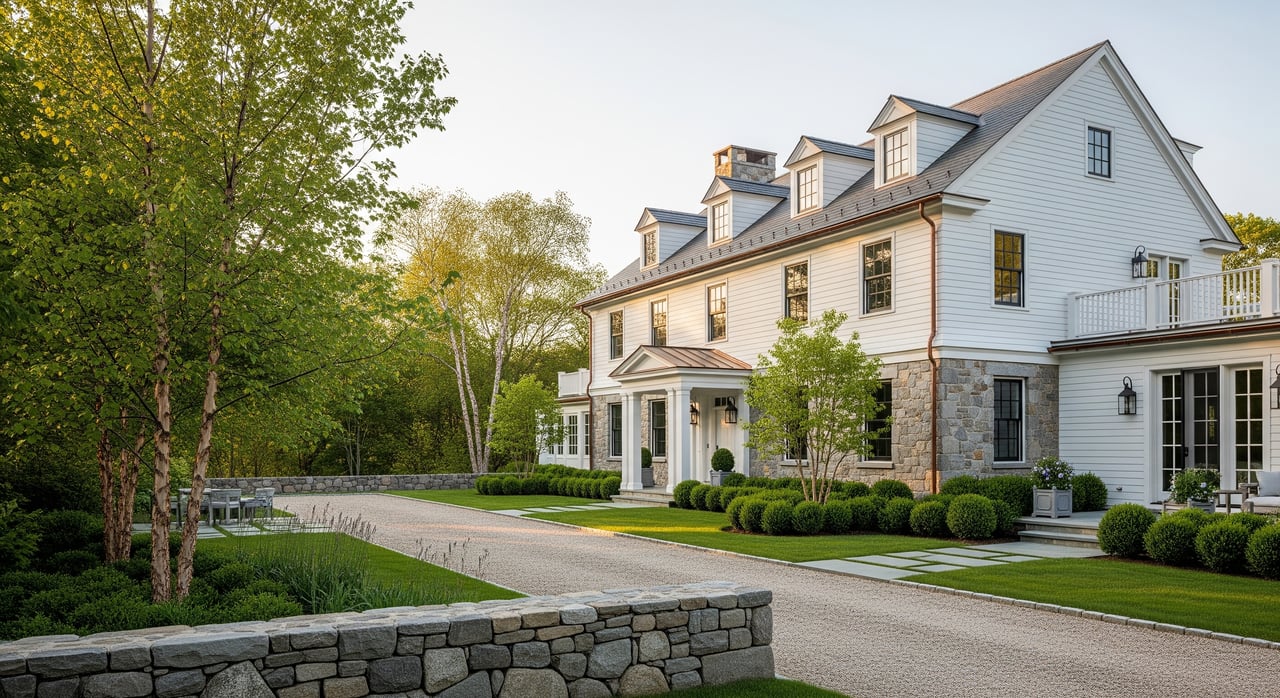
When you picture a Dover country home, what do you see? A white farmhouse with a wraparound porch, a classic center-hall Colonial, a glassy contemporary tucked into the trees, or a private estate with long stone walls and a gated drive. If you are design-minded, naming what you like is the fastest way to find it. In this guide, you will learn how to spot Dover’s most common styles, what the interiors feel like, how each supports a country lifestyle, and what to ask before you buy. Let’s dive in.
Dover setting and context
Dover is a small, low-density town west of Boston with rolling, wooded lots, meadows, and conservation land. Properties often sit far back from the road with long driveways, mature trees, and stone walls that frame the approach. This country setting shapes architecture, including house siting, porch and mudroom use, and outdoor amenities like gardens, paddocks, and trails.
Climate matters too. New England winters bring freeze-thaw cycles and snow loads, which influence roof pitch, siding choices, window quality, and insulation. You will see practical features like well-flashed roofs, durable clapboard or shingle siding, and mudroom entries that keep daily life organized in all seasons.
New England farmhouse essentials
Visual cues to spot
- Simple gable or side-gabled roof, sometimes a cross-gable
- Two-story rectangle or 1½-story Cape form
- Clapboard or board-and-batten siding, often in white or soft neutrals
- Full or partial front porch, sometimes a wraparound
- Metal or asphalt roofing with steeper pitches in older examples
Interior feel
- Country kitchens with farmhouse sinks, pantries, and often a large island
- Mudroom or boot room at a secondary entrance
- Exposed beams and wide-plank floors in older homes
- Easy flow to porches, terraces, and gardens
Dover variations
- Historic small farmhouses with later additions that expand kitchens and family rooms
- Modern neo-farmhouses that blend traditional forms with open plans and high-end finishes
- Barns, sheds, or carriage houses that serve as storage, workshops, or conversion candidates
Country lifestyle fit
- Direct connection to gardens, pets, and small-scale agriculture
- Functional service spaces for outdoor gear and daily chores
- Porches that extend living space across three seasons
Buyer checklist
- Confirm whether it is an original farmhouse or a neo-farmhouse new build
- Review foundation, framing, and trim for age and condition
- Ask about insulation, windows, and heating systems for winter comfort
- Check rules for outbuilding use or conversion with local planning and conservation offices
Colonial style, from Georgian to Revival
Visual cues to spot
- Symmetrical facade with a central entry
- Evenly spaced multi-pane windows, often 6-over-6 or 9-over-9
- Gabled or hipped roofs, sometimes gambrel in the region
- Classical entry trim such as pediments, pilasters, and sidelights
- Clapboard or shingle siding, with occasional brick in formal examples
Interior feel
- Center-hall layouts with a formal entry and staircase
- Distinct living and dining rooms, fireplaces in multiple rooms
- Traditional moldings, wainscot, and paneled trim
- Many kitchens have been expanded or opened to create a family hub
Dover variations
- Colonial Revival homes that pair symmetry with more modern floor plans
- Early colonial forms with attached ells that later became mudrooms or enlarged kitchens
Country lifestyle fit
- Formal rooms that host gatherings with ease
- Larger lots that support gardens and mature landscapes
- Heavier, enclosed forms that can be easier to heat, with many kitchens modernized for daily living
Buyer checklist
- Identify whether it is an original colonial form or a Revival-era build
- Evaluate kitchen and family room updates for flow and proportion
- Ask about window and insulation upgrades for energy efficiency
- Review setbacks and potential for additions or garages with town offices
Contemporary homes and modern hybrids
Visual cues to spot
- Asymmetrical massing with larger window walls
- Low to moderate roof pitches, decks, and patios that integrate with the site
- Mixed materials such as wood, stone veneer, and selective metal accents
- Emphasis on light, views, and indoor-outdoor flow
Interior feel
- Open-plan living where kitchen, dining, and family spaces connect
- Higher ceilings, vaulted rooms, clerestory windows
- Modern systems, including central HVAC, potential heat pumps, and efficient windows
Dover variations
- Midcentury influences in some 1950s to 1970s homes with low-sloped roofs and picture windows
- Newer builds that pair contemporary planning with traditional New England materials
- Modern barn-house forms that simplify the gable silhouette with expansive glazing
Country lifestyle fit
- Panoramic views of meadows, woods, and trails through large windows
- Flexible spaces for work-from-home, hobbies, and multi-generational needs
- Seamless connections to patios, decks, and lawns for easy entertaining
Buyer checklist
- Review window age and performance for winter comfort
- Confirm mechanical systems, including HVAC type and efficiency
- Evaluate deck and patio conditions for long-term maintenance
- Check siting and grading for proper drainage in freeze-thaw seasons
Estate-style and custom luxury
Visual cues to spot
- Large footprints with multiple gables and substantial entryways
- Stone, shingle, and clapboard combinations with porte-cochères
- Landscaped drives, gates, guesthouses, and multi-car garages
- Pools, tennis courts, and equestrian facilities on larger parcels
Interior feel
- Professional kitchens and formal entertaining rooms
- Primary suites with spa-like baths and generous closets
- Finished lower levels that often include recreation, fitness, or theater areas
- High-performance envelopes and systems, including automation and generators
Dover variations
- Country estate design that marries New England materials with modern scale
- Siting that prioritizes privacy, views, and the landscape experience
Country lifestyle fit
- Space for comprehensive outdoor living and recreation
- Infrastructure for vehicles, tools, and country hobbies
- Flexibility to add or reconfigure outbuildings within local rules
Buyer checklist
- Confirm orientation and privacy relative to meadows, woods, or water features
- Review systems such as radiant floors, generators, and automation
- Ask about approvals for future improvements with planning and conservation
- Inspect long driveways and gates for winter access and maintenance needs
Renovation and maintenance in Dover
Older New England homes can be transformed by smart envelope upgrades. Insulating attics and walls, and replacing single-pane windows, can improve comfort and reduce heating costs. Moisture management is essential, from stone foundations to proper grading and drainage. In all cases, keep original beams, wood floors, and trim where possible, and integrate new kitchens and baths in a way that respects proportions.
Additions are common, including mudrooms, larger kitchens, and garages. Look for seamless rooflines and consistent foundation work as signs of quality. In contemporary and estate-scale homes, confirm window performance, roof condition, and mechanical age, since those systems are both comfort drivers and negotiation points.
Site planning on larger lots
Long driveways frame the arrival experience and require snow removal planning. Mature shade trees, meadows, and stone walls are prized landscape features that add character and value. When considering new outbuildings, barns, or paddocks, review local planning and conservation requirements for placement, size, and any wetlands setbacks before you build.
Buyer vocabulary for faster searches
- Neo-farmhouse vs. original farmhouse
- Center-hall colonial vs. Cape
- Gambrel or Dutch Colonial roofline
- Colonial Revival detailing
- Open plan and chef’s kitchen
- Estate lot, paddock, or turnout areas
How to choose your best fit
Start with lifestyle. If you want porch time and gardens, a farmhouse may feel natural. If you value formal entertaining, colonials and estate-style homes deliver gracious public rooms. For sunlight and flexible spaces, a contemporary might be the right choice.
Match the site. Walk the lot to understand approach, privacy, and winter access. Look at views, tree canopies, and how the house sits relative to meadows or woods.
Confirm systems. Ask about insulation, windows, roof age, and heating. In Dover’s climate, well-performing envelopes and mechanicals make a daily difference.
Work with a trusted advisor
If you want to narrow your search to the right style and site, it helps to walk properties with someone who knows Dover’s architecture, land, and permitting process. From equestrian facilities and estate lots to historic farmhouses and modern builds, you deserve senior-level, consultative guidance that balances design, lifestyle, and value. For calm, experienced representation that handles details like land, septic, and conservation while positioning you to win, connect with Mary Crane Properties.
FAQs
What architectural styles are most common in Dover country homes?
- You will most often see New England farmhouses, colonials including Georgian and Colonial Revival, contemporaries and modern hybrids, and custom estate-style properties.
How do Dover’s rural lots influence home design and siting?
- Larger, wooded parcels with long drives encourage homes that sit back from the road, with porches, mudrooms, and outdoor spaces that connect to meadows, trails, and gardens.
What should I ask about energy performance in older Dover homes?
- Ask about attic and wall insulation, window type and age, roof condition, and heating systems, since these items drive comfort and winter operating costs.
Are outbuildings or barn conversions possible on Dover properties?
- Many buyers value barns and sheds, but rules vary by lot and location, so check with the town planning and conservation offices before building or converting.
How do contemporary homes handle New England winters?
- Look for energy-efficient windows, updated HVAC such as heat pumps or modern boilers, proper roof flashing, and thoughtful siting that manages drainage and snow.
What adds value when renovating a colonial or farmhouse in Dover?
- Seamless kitchen expansions, functional mudrooms, preserved original woodwork, and envelope upgrades tend to resonate with buyers seeking country comfort and character.